



How Science Can Learn More About ‘Proxima b’ And All Earth-Like Worlds
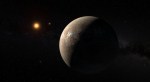
“This planet is almost definitely tidally locked to its star, meaning that the same hemisphere always faces the star and the opposite hemisphere always faces away, just like the Moon does to Earth. The star itself is active and flares frequently, meaning that catastrophic radiation impacts the Sun-facing side quite regularly, but never touches the dark side. And the “seasons” are determined by the ellipticity of its orbit, rather than its axial tilt. But there’s still so much left to learn, and we have a number of different technological avenues to explore – including potentially all of them – if we want to learn more about it.”
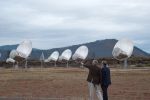
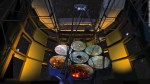
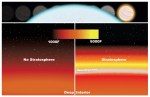
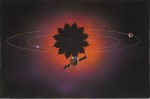
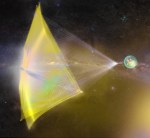
Now that we’ve learned the nearest star to our Sun, Proxima Centauri, has a rocky planet at the right distance for liquid water, it’s time to consider how we might learn the answers to our burning questions about it and all nearby Earth-like exoplanets. What’s the atmosphere like, and what does it consist of? What does the surface of the world look like, and what’s on it? And is there life, or intelligent life, present at all? There are three ways to conduct these searches, and they’re all complementary. We can use giant ground-based telescopes, including arrays of telescopes, for high-resolution spectroscopic images of these worlds. We can use space-based telescopes with coronagraphs or starshades to image these worlds directly over time. Or we could undertake a journey across space, and visit the system directly to obtain in situ measurements we could never get from afar.
Finding out how this planet is no longer a statistical probability but a real thing made my day yesterday.

 tinfoilparachute