


Dark matter faces its biggest challenge of all
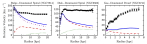
“Yet in all of them, a very interesting and unexpected property shows itself: there’s a relationship between the observed gravitational acceleration and the distribution of the normal (baryonic, or protons, neutrons and electrons) matter alone. In other words, if you measure how quickly the galaxies rotate, it seems to depend — within a reasonable set of errors — only on the presence of the normal matter.”
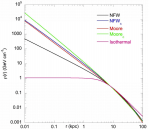
Dark matter is a hugely successful theory for explaining a whole slew of observations about the Universe. Just by adding this one ingredient to the mix, we can successfully simulate and reproduce the large-scale structure, CMB fluctuations, galaxy clustering and cluster collision properties observed in our Universe. Without dark matter, there’s no other way known to make the Universe work in line with what we see. And yet, if you go down to the small scales of individual galaxies, dark matter predicts a dark matter halo of a specific profile with specific rotation properties. When we look at the actual galaxies, those rotation properties don’t match! Even worse, they appear to be correlated solely with the normal matter content of the galaxies, and have no dependence on whether the galaxy is rich-or-poor in dark matter.

 tinfoilparachute