Yesterday’s conversations revealed how poor of a cultural fit I really am at this job. I grasp at the straws trying to find things in common with people here while trying to retain whatever I remember of being myself. Somehow it reminds me of being back in college.
I wonder if they sensed that I am unhappy here, and that’s the reason they decided, unasked, to give me more money. Super nice of them, and I am not complaining, but it’s one of those rare cases when money doesn’t solve anything. Maybe it will be enough for a short trip somewhere, but I am past the phase in my life where I am able to stop, clear my head, and think.
The bartender on our Saturday “date” noticed our inadvertently matching Icelandic sweaters, and R told her that they were from a surprise trip I took her on.
I forgot what it’s like to plan a surprise trip for someone you care about.
Last night I just realized that there can be no more surprise trips in the future, and I know it shouldn’t, but it still made me sad.
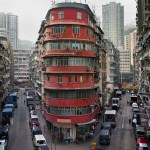
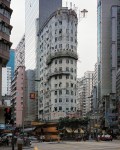
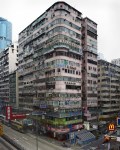
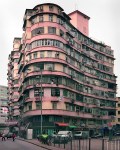
In “Hong Kong Corner Houses,” the internationally renowned German photographer Michael Wolf continues with his visual quest for the overlooked and underappreciated urban phenomena that give a city its special character. This time, he draws our attention to Hong Kong’s urban corners and buildings that are often inconspicuous amid the high-rise, high-density urban clutter of Hong Kong. These ordinary residential-commercial buildings of 1950s and 1960s vintage represent the expression of local Chinese pragmatism and expediency in the economic austerity of early postwar decades.
The photographic presentation captures the inherent paradoxes of their architectural character: the quiet prominence, attractive banality, and tectonic chaos that give urban Hong Kong its endearing quality. Complementing the superb photographs of Michael Wolf, “Hong Kong Corner Houses” features an essay and extended captions by two of Hong Kong’s best-known academics in the field of architectural conservation, Drs. Lynne DiStefano and Lee Ho Yin.
Michael Wolf is best known for his ‘Architecture of Density’ work in Hong Kong, but another collection from HK University Press showcases some of the city’s more classic heritage. ‘Progress is often equated with destroying the old and bringing in the new,’ says the German-born photographer…
…They were mostly constructed in the 1950/60s…
…Whilst some of the structures featured below are barely three decades old, the pace of development means such architectural curiosities are becoming an increasingly rare sight…
…This style of building is more common in older areas of Kowloon…
..Illegal structures remain an issue with these low-rise buildings, but many have been destroyed since a clean-up began in the 1990s…
…Most are under 10-floors tall. This was because the law required an elevator to be installed if a building was over 10 storeys, and also due to the presence of the old Kai Tak airport…
…The style is reminiscent of early American modernist skyscrapers – curved facades with strong vertical and horizontal detail…
..The 2008 collection pays homage to this overlooked and underappreciated urban phenomena and photos were once displayed around the MTR system…
Mireille Kamariza, 27, is from Burundi, where it’s rare for girls to attend college — not to mention work with world-class scientists. But earlier this year she and her adviser unveiled a potential breakthrough in fighting TB.
The fact that science opens up to such a greater pool of people than ever before, if our civilization survives this century, makes me very hopeful for the future.
As the job loop became successful, widespread confusion started to set in around consumption. People in advanced economies became obsessed with material progress. Buying more material goods was seen as positive and healthy because it supported more employment, which in turn allowed more people to buy things. All consumption became desirable consumption and policymakers and consumers alike gave up on any distinction between needs and wants. [Reference to “how much is enough?” by Skidelskis here]
Worse yet, we started to engage in so-called positional consumption. If your neighbor bought a new car, you wanted to buy an even newer and more expensive model — whether you needed it to survive or not. Such consumption behavior emerged not just with respect to goods but also to services—think of the $xxxx hair cut or the $xxxx dinner at Michelin starred restaurant.
Interesting to think that a break with the “job loop” (basic income) could have wider impacts, such as environmental impacts as desire for material items decreases, and therefore manufacturing etc declines. And that that could theoretically be less of an issue because the economy doesn’t rely on jobs the same way.
Sleep Demons – a fascinating read on our nocturnal misadventures and the science of REM, with a lovely passage about Maurice Sendak’s strategy for combating insomnia.










 tinfoilparachute