If the wolves come out of the walls… it’s all over.
Month: July 2017

Sean Trainor | Losing Control
Viewed from a distance of more than a century, the nineteenth-century beard fashion looks like a basic historical fact. For many observers, the succession of bearded and otherwise unremarkable U.S. presidents during the decades preceding 1900 is no more surprising than the fact that there are mountains in Switzerland. And yet the arrival of this fashion came as a great shock for those who lived through it. Sweeping much of Europe, North America, and Latin America after roughly two centuries of clean-shavenness, the beard movement was almost certainly the most dramatic development in nineteenth-century men’s fashion – every bit as shocking as if knee breeches and ruffled shirts were to once more become the dominant mode of men’s dress throughout the so-called ‘Western’ world.
Fascinating analysis, but my biggest takeaway is the succinct definition of modern american masculinity as being “about mastery and control: control over one’s destiny and that of ‘lesser’ men and women. ”
This makes me wonder how much of my subconscious rejection of this approach has to do with a principled position, and how much simply came from growing up outside of American culture that made it so utterly foreign.
Just learned that Warren VT is the place to see the 4th of July parade. Totally tongue in cheek. And yes, their senator, Bernie Sanders, was in attendance.
It’s 6 hrs from here. Maybe go next year.
On my way to visit Trump, I found the kindest corner of the Internet
“We do this stuff in our spare time, which means that we intentionally take time away from family, work, and hobbies to advance this mission. If government worked the way it should, we could all go to the movies or just hang out instead of organize our hack nights and go to City Council meetings. But it doesn’t. So we do this. I will show up at yet another Council meeting, and you need to show up for this meeting.“
This is from the blog of the founder of Code for America. I wish people considered this more, and doing destructive stuff less.
On my way to visit Trump, I found the kindest corner of the Internet
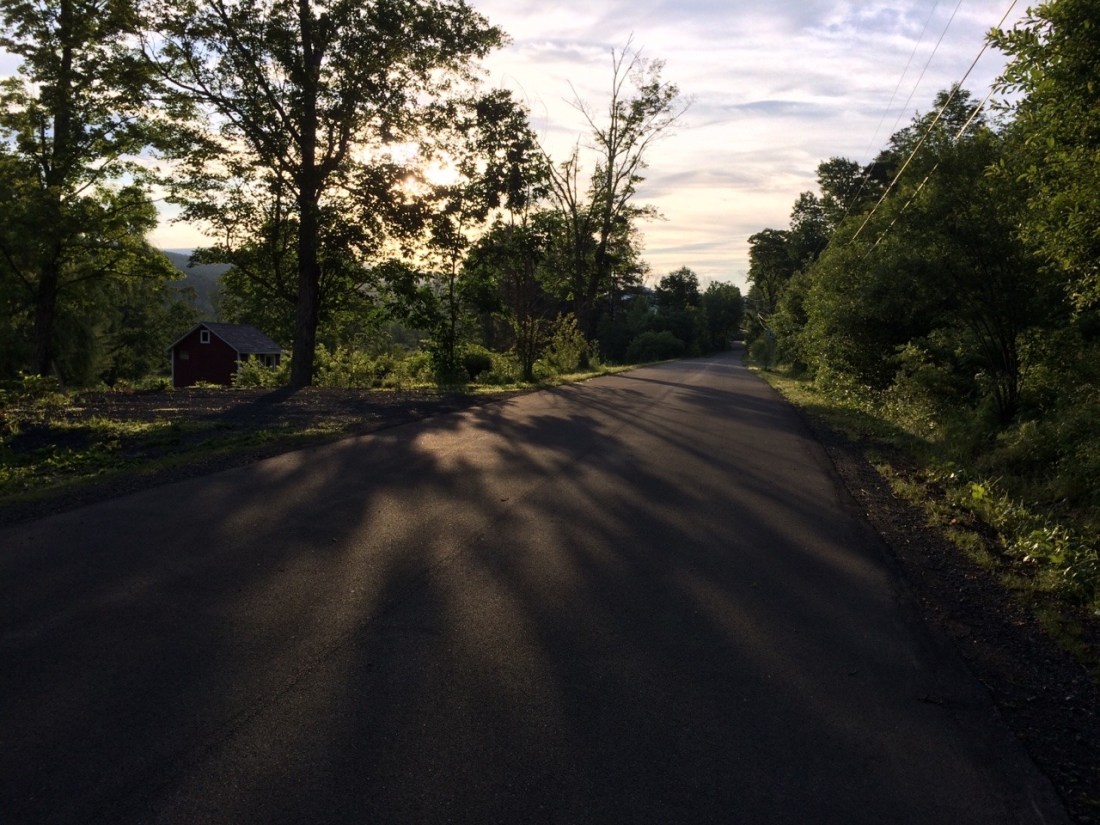


Yesterday.
It was impossible to sleep because of the nonstop cannonade of fireworks outside the windows that went on well into the night.
The only time I’ve seen anything close to this was Christmas Eve in Managua.
One such show had window-rattling explosions happening literally 10m away from the window, lighting up the room red and white despite the curtains.
Apparently this area, along with North Manhattan, had the highest number of illegal fireworks complaints last year, vs a single one in all of North Brooklyn and Manhattan. Police used to respond to them, but it was controversial, so in last couple of years they stopped.
As I was failing to fall asleep, I was thinking of the reasons poor areas have substantial income to expend on fireworks, and rich areas don’t.
All I could think of was selfishness and machismo vs empathy, sense of community and consideration for others, which is surprising, since I would have expected the poor to have less of the former and more of the latter – but that is definitely not the case here. Although individualism is ostensibly an American value, according to trumpiots, so if that’s what they were celebrating, rattling many so the few could assert their manliness would be the most appropriate way to do so.
In Sappho’s poem, her addresses to Gods are orderly, perfect poetic products, but the way—and this is the magic of fragments—the way that poem breaks off leads into a thought that can’t ever be apprehended. There is the space where a thought would be, but which you can’t get hold of. I love that space. It’s the reason I like to deal with fragments. Because no matter what the thought would be if it were fully worked out, it wouldn’t be as good as the suggestion of a thought that the space gives you. Nothing fully worked out could be so arresting, so spooky.
Anne Carson, cited by Will Aitkin | The Art of Poetry No. 88 (via stoweboyd)
Things to remember from this trip:
-What pines smell like
-What it’s like to walk barefoot on the grass without worrying about broken glass
-What stillness sounds like
 tinfoilparachute