This is really about my old-company colleagues, and some of the remaining friends from that time, and former neighbors – before we could no longer afford to live in my beautiful old neighborhood that we still walk through every day on the way to L’s daycare .
Basically, everyone we’re trying to compete with while living here.
Anyone who went to a liberal-arts school in the States will, too, recognize many of them as their classmates.
the questions the author raises are really quite important about the world we live in. As usual, there are no comfortable answers.
When we evaluate people’s moral worth on the basis of where and how they live and work, we reinforce the idea that what matters is what people do, not what they have. With every such judgment, we reproduce a system in which being astronomically wealthy is acceptable as long as wealthy people are morally good.
“Calls from liberal and left social critics for advantaged people to recognize their privilege also underscores this emphasis on individual identities. For individual people to admit that they are privileged is not necessarily going to change an unequal system of accumulation and distribution of resources.
Instead, we should talk not about the moral worth of individuals but about the moral worth of particular social arrangements. Is the society we want one in which it is acceptable for some people to have tens of millions or billions of dollars as long as they are hardworking, generous, not materialistic and down to earth? Or should there be some other moral rubric, that would strive for a society in which such high levels of inequality were morally unacceptable, regardless of how nice or moderate its beneficiaries are?”
… all reality in general, is in the image. The vector of significance has reversed; reality has slipped into being a symbol, has entered the magic universe of the symbolism of images.
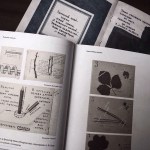
“Fathers’ letters from the Gulag” is a poignant book compiled from a unique archive of letters and drawings from prisoners of Soviet camps.
In their letters the fathers hurry to pass on as much valuable information to their children as they can. As well as knowledge, they express their love and tell interesting stories to captivate their children.
The subject matter is made all the more poignant by the fact that none of these fathers returned home from the camps.
………
«Папины письма» – собрание писем отцов, содержавшихся в лагерях ГУЛАГа, их детям. Во многих случаях это оказалось последним, что сохранилось в семьях от отцов. Письма совершенно разные, но все они объединены родительской любовью, желанием поддержать детей и передать им свои знания, направить их в будущую жизнь.
К книге прилагается копия самодельной иллюстрированной книжки со сказкой «Об отважном почтальоне с полуострова Таймыр», написанной Виктором Луневым в Норильске. Заключенным в Норильлаге В.Е.Лунев находился с 1936 г. до февраля 1942 г.
В 1950-м его вновь арестовывают по старому обвинению. Освободился Виктор Лунев 1954, в 1957 был реабилитирован.
The rich detail of Jupiter’s atmosphere is on full display in this enhanced-color image from the Juno spacecraft. (Full resolution version here – trust me, you want to click that link.) To the north, on the left side of the image, Jupiter’s Great Red Spot swirls. To the center and right, the cloud bands of Jupiter’s southern region are coming into view. The color enhancements really highlight eddies on the edge of these bands. These are examples of Kelvin-Helmholtz instabilities caused by shear between cloud bands moving at different speeds. Within the bands, smaller vortices spin. Some of these are anti-cyclones, high-pressure storm systems found all over the planet. Jupiter’s atmosphere still holds many mysteries for scientists, but I love how every gorgeous image Juno sends back shows fluid physics written larger than life across our solar system’s biggest planet. (Image credit: NASA/JPL-Caltech/SwRI/MSSS/G. Eichstädt /S. Doran; via Gizmodo)
Factory-bottled water costs around 2,000 times as much as artisanal-bottled water. The former is usually not recommended to be stored for longer than two years, while the latter can be stored for up to six months.
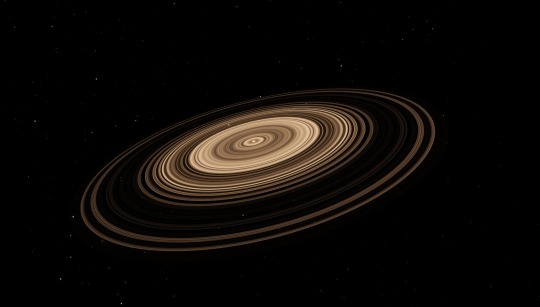
J1407b is an exoplanet (but it can also be a brown dwarf) very interesting, orbiting its star J1407. It is larger than Saturn or Jupiter, and is surrounded by a ring system that is about 200 times larger than the rings of Saturn, very different from what we are accustomed to see.
Thirty-seven rings extending 90 million kilometers from the planet — over half the distance from the Earth to the sun — encircle the world. These planetary rings are the first found outside the solar system.
This exoplanet is 434 light-years away in the constellation Centaurus.
J1407b could house moons that could be formed by the material of the rings. One of their moons could be as large as Mars or Earth, and could orbit between the gaps of the rings, shaping them.
Astronomers expect the rings to become thinner in the next million years and eventually disappear as they form satellites from the material of the rings.
The discovery of the J1407 system and its unusual eclipses were reported by the team led by astronomer Eric Mamajek of the University of Rochester in 2012. The orbital period of J1407b is estimated at about a decade.
Simulation of the eclipse of the star J1407 by the ring system around its putative exoplanet J1407b. Each time a ring passed in front of the star, it dimmed. When entering a gap, the star brightened up again. Graphing the highs and lows, scientists created a profile of the ring system.
What the rings of J1407b would look like in our sky (above the Old Observatory in Leiden, Netherlands) if it was located where Saturn is now.
Most American bikes thru the ’60s were one-speeds for kids, because
teenagers were aching to grow up fast and cars seemed better for dating.
Beginning at the end of WWII, the older generation
launched a 20 years or so succession of screwups that sent a message to
the younger generation that these folks were not to be trusted or
emulated. Things like pesticides, the Korean War, Emmett Till, Viet Nam, holding women back, civil rights stuff, hating rock-n’-roll were just a few of the problems caused by the older generation.
A big one happened on January 28, 1969—an oil spill off the Santa
Barbara (California) coast. Union Oil took a shortcut with the drilling
rig, and the ocean erupted with oil. To a country of young people who’d
been environmentally sensitized by Rachel Carson’s Silent Spring, it was the straw that broke the back, and led directly to the first Earth Day,
April 22, 1970.
Earth Day was a protest against environmental
destruction, so riding a bike wasn’t retreating to childhood and taking
you out of the dating pool; it was a way to protest the older
generation’s greed that was destroying the environment. The order to
young people was: Don’t use gas on Earth Day. Show you care, don’t be part of the problem, ride a bike,
and we did.
Some of the bikes were borrowed from younger siblings, some
were leftover from when they were young, but bike dealers ramped up for
Earth Day, and lots were bought new. Schwinn Varsities sold like mad,
because Schwinn dealers were everywhere. High-schoolers took to the 10-speeds
because the drop bars and gears made them not kids bikes. But the
Varsity was unexotic and heavy, so if you were a one-upper, you held out
for a European bike—a Raleigh Super Course, Peugeot UO-8, Gitane
something or other, a Mercier, or the exotic (in my neighborhood) Cote
d’Azur.
All of the early 1970s foreign ten-speeds ones were steel and slender,
and had lugged frames and nice-looking decals. If you were into bikes
you’d get the manufacturer’s catalogs at the bike shop and read about
what the better bikes had that you’re didn’t, and figure out how to
spiff up your U-08 so it was closer to a PX-10. (Mark put Campy Gran
Sport derailers on his first cheap French bike.)
The first American framebuilder in the renaissance was Albert
Eisentraut, who grew up in Chicago and learned from Oscar Wastyn, the
first builder of Schwinn Paramounts. Albert was building his own frames
in the late ’50s, and taught frame-building classes in the ’70s.
Tom
Ritchey made his first bike frame at 15 ½, in … 1975? Something like
that. Tom was never normal, he’s always been Mozart, and he’s not the standard.
Anyway, Eisentraught’s classes—seeding the garden
that, by the late ’70s, would grow into dozens of American custom frame builders, who collectively revved up interest in bikes and riding and bike geekery in general.
By then the European brands, the French in Particular, were losing to the Japanese. The 10- and then 12-speeds were well established, too,
from cheap to expensive, all of them with familiar proportions and
details, just executed with different degrees of perfection constrained
by price.
Even the poorer executions were still signs of sincere
attempts at art, and tho they didn’t get a lot of respect at the time,
it’s an unexpected treat to see, locked up with a white plastic bag as a
seat cover, a cheap ’70s
bike with chome-tipped fork blades, seat stays, and chainstays, and a
flat fork crown with a thin stamped steel cap on it with an artistic
shoreline. These days, cheap bikes still copy expensive ones, but most
of today’s expensive bike are de-detailed and are, I’d say, bad role models. Like 7-year old with leather and chains.
When the first actual mountain bikes were made in the late ’70s, they
veered off from strict road style, but were just as beautiful (maybe
more) than any European road bike . The upright bars and fat tires gave
them away as mountain bikes, but frames and forks were still beautifully
detailed. The first Stumpjumper was lugged and had a fork crown, just
like most good road bikes. Then price competition forced out the lugs
for tig-welds, and crowned forks for the crownless “unicrown” style, but
from 25 feet they all looked about the same, with those traditional
proportions.
By 1988 more than 75 percent of the bikes sold in America were
mountain bikes, and moto-crossers and motocross magazine publishers saw
the trend and got involved. To motocrossers, the early mountain bikes
must have looked unevolved, effete, and ready for a crayons-to-perfume
makeover. The whole look changed—the joint details, proportions,
graphics, and these new mountain bikes didn’t look European anymore.
It’s not a shame that they didn’t look European. Why should they? The
shame is that they looked so crude, that somebody in the loop figured
what the hell, it’s just a bike.
In late ’89, Rock Shox developed the suspension fork, and after
suspension bikes won big in the 1990 mountain bike world championships,
every body wanted them and almost all manufacturers jumped on it.
At first the
shocks were only on $1,000+ bikes, but within five years they came down
to $450 bikes. It was hard to sell a mountain bike without them, and
nobody knows that better than me (or Bridgestone sales reps at the
time). Now it’s 2017 and it’s hard to find a new model bigbrand a city bike or
whatever, that doesn’t have shocks. Fat tire bikes without them are barely even recognized as mountain bikes.
Suspension forks lead to full suspension frames, which lead to events
that required body armor and helmets with full face protection, and at
this point the desired look was gnarly, raw, and big. Ugly was pretty,
pretty was obsolete. By the early 2000s, mountain bikes looked like
motorcycles without the motors, and the clothing and helmets followed
the same route. It’s hard to talk about these changes without coming off
like a grump, but I’m just trying to address the evolution of these
visual and techy changes. It’s kind of interesting, isn’t it?
Do bicycles need disc brakes? If heavier and faster motorcycles could
use rim brakes, they would—because rim brakes are more powerful. But
motorcycles weigh so much and go so fast that they’d burn up rim brakes.
Rim brakes are ideal for most bike riding, but that gets lost in the
inferiority complex.
There are some riding situations that favor disc brakes. Steep,
rim-heating descents, grit, slim, and muck (it’s not a matter of braking
performance in muck, it’s that muck packs rim brakes. Don’t ride in
muck.) A lot of people feel better about their chances of survival when
they’re over-gunned, over-sheltered, over-clothed, over-fed, and
over-vehicled, no matter what kind of vehicle it is. The Ford F150 is
the best-selling motor vehicle in America. I’m sure it’s a great truck,
but still…
The trend to single chainrings and clutchy rear derailers is another
way that bikes are going more like motorcycles. I’m all for
simplification—if you can get by with one ring, that’s the way to go,
for sure. And rear derailers with clutches that maintain chain tension
to keep the chain engaged on the chainring and reduce chainslap on the
chainstay. —those aren’t evil insidious infiltrations from the dark
side, but they are from the dark side. Ha!
Motors are the final frontier, and they’re coming, too. People were
monkeying with motors on bikes in the early 1890s. Electric motors
didn’t hold a charge well and were too bulky. Steam was hard to start
and too dangerous to put between your legs. The internal combustion
engine, patented in 1885, was the winning design, and by 1903 we had
Indians, Harleys, and Triumphs (and cars, too). Once motors were
available, adults quit riding bikes.
One living & smart bike industry guy who works for a huge bicycle
maker predicts that electric motor bikes will make up 30 percent of the
bicycle market by 2022. He calls them just eBikes.
eBikes are conveniently called ebikes to de-emphasize the motor, even
though the motor is why they exist, and they appeal across the board:
To baby boomers who don’t want to grunt anymore; to millenials who like
their hipness and tech and who also don’t want to grunt; to former
drivers who for one reason or another have lost the right to drive, or
who just can’t afford a car; and to Green people who want to be one less
car. The scary thing is motors + fat bikes + trail access.
Positioning eMotorbikes as just another kind of bicycle
avoids licensing, registration, more costs, a long wait at the DMV… and
allows them on bike lanes and multi-use paths and trails in your local
open space that still allow bicycles. Does it not matter that there’s a
motor?
eMotorbikes can be a blessing for some people, can replace cars on
the road, but I bet they’re replacing more bikes than cars. When they
do, GREAT! But the question is: at what point does a bicycle stop being a
bicycle? How loosely do you define bicycle? Gliders were never
considered the first airplanes.
Rivendell Bicycle Works is a bicycley bicycle company, which means we make the kind powered by muscles and gravity. We aren’t going to sell “bicycles” with motors.
Maybe it’ll be to our doom, but we just like the simple, refined,
nearly perfect pedal bike. It’s the best thing ever developed or that
ever will be, even though sometimes it makes you tired and sweaty and
even though it’s not always a joy. If an eMotorbike takes the place of a
car, it’s doing less damage. When it takes the place of a bicycle, it
does more. A bicycle, even when ridden by a world-class farter (eater of
mung beans, sprouts, and cabbage) pollutes much less. In 2017 with another monster hurricane heading towards Florida, that’s
something to celebrate, isn’t it?










 tinfoilparachute


