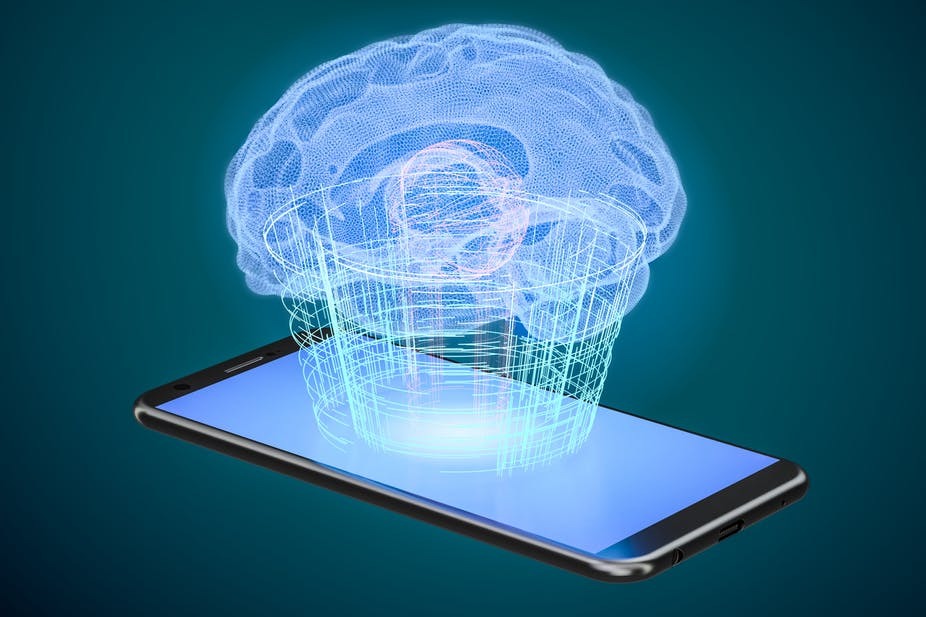
With all the advances artificial intelligence is currently achieving, many people are asking themselves if and when machines might be able to get a consciousness.
Such a machine would be able to take the place of humans in all jobs, which would influence the way society would be made up, maybe even resulting in a dystopian future, as well as raising legal and ethical problems. If a machine would be subsequently seen as a person, laws would apply for this AI, and it would be liable in case its actions hurt someone. And, the big fear many people have regarding this advanced technical entity is, would machines, like in Matrix, one day rebel against humans and even would want to eliminate the human race, representing a culmination of evolution?
Most experts in computer science think that consciousness is a characteristic that will eventually emerge duets technological development; many think that consciousness involves accepting new information, string and retrieving old one, and cognitive processing of all that information into perception and actions. Many philosophers and physicists, however, postulate that human behaviour can’t be computed by a machine, e.g., the process of being creative and the sense of freedom, because they don’t come from logic or calculations.
According to quantum therapy, consciousness is complementary to the physical world, but in the end they are just two different aspects of reality; the concept known as the big-C, which has its origins in the Copenhagen Interpretation, states that when a person observes or experiments on aspects of the physical world, their consciousness is interacting and causes discernible change. Therefor, consciousness is a given and no attempts are made to derive it from physics. The theory states that cosnciousness isa thing that exists by itself, even though we need a physical brain to establish it, leading to problems like Schrödinger’s cat.
A biological approach states that biology itself emerges from chemistry, which emerges from physics, and that consciousness emerges from biology; this model, the little-C, agrees with the neuroscientific view that processes of the mind are identical to states and processes of the physical brain, as well as agreeing with recent interpretations of the quantum-field, which is trying to solve the Many World Interpretation.
Philosophers of science, last but not least, believe that those modern quantum physics’ views have parallels to ancient philosophy, the Big-C resembling the theory of mind in Vedanta (consciousness s the fundamental basis of reality), while the little-C is similar to Buddhist believes.
However, currently, scientist are exploring whether consciousness is always a computational process; some argue that the creative moment is not at the end of deliberate processes. It might well be the case that consciousness requires a self-organising system like the brain, which would mean that machines would be unable o gain it, since it might not be possible to create an adaptive self-organising machine as sophisticated as the human brain.

 tinfoilparachute