nubbsgalore:

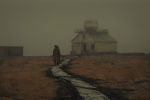
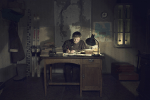
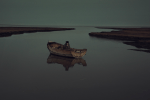
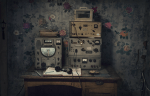
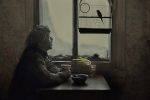
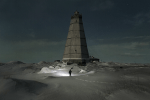
evgenia arbugaeva documents vyacheslav korotki, a meteorologist who has spent the past thirty years living alone at a remote arctic outpost on the barents sea, in a century old wooden house that became a meteorological station in 1933, where he was sent by the russian state to measure and log climatic conditions and then transmit the data via radio to moscow. 

notes evgenia, “the world of cities is foreign to him. he doesn’t accept it. i came with the idea of a lonely hermit who ran away from the world because of some heavy drama, but it wasn’t true. he doesn’t get lonely at all. he kind of disappears into tundra, into the snowstorms.” 

//www.instagram.com/embed.js

startalkradio:

#Repost @nazpicture
・・・
🌌’Milkyway season’ has arrived for those of us in the Northern Hemisphere! From late April through the end of July the core of the Milkyway is exposed throughout more of the night than any other time of year. Couple that with a new moon phase, taking yourself far from light pollution and being blessed with clear skies and you have yourself a recipe for an enchanting night. Here we see our galactic core over Lake San Cristobal in Colorado during prime viewing conditions. [July 2016] .
.
.
.
.
#MerrellOutside #best_timelapse #longexposure_shots #nightimages #nightshooterz #nightshooters #nightpics #astrophotography #astrophoto #astro_photography_ #astro_photography #longexposure #longexpohunter #longexpo #amazing_longexpo #amazingearth #natgeospace #nightphotography #night_excl #amazingphotohunter #fantasticuniverse #timelapse #timelapsevideo #timelapsephotography #videooftheday

I wanna go somewhere where I could actually see Milky Way

how to make a dystopia

Cory Doctorow has a nice editorial in Wired (where he plugs his book ofc).

Main point, however, is that the difference between utopia and dystopia isn’t how well everything runs. It’s about what happens when everything fails.

Here’s how you make a dystopia: Convince people that when disaster strikes, their neighbors are their enemies, not their mutual saviors and responsibilities. The belief that when the lights go out, your neighbors will come over with a shotgun—rather than the contents of their freezer so you can have a barbecue before it all spoils—isn’t just a self-fulfilling prophecy, it’s a weaponized narrative. The belief in the barely restrained predatory nature of the people around you is the cause of dystopia, the belief that turns mere crises into catastrophes.

This is at the core of the Trumpland – people who cling to guns and don’t trust anybody. The antithesis to it is when we had Sandy hurricane, and no electricity and where strangers helped each other.

Stories of futures in which disaster strikes and we rise to the occasion are a vaccine against the virus of mistrust.

I am not a stranger to the prepper instinct he refers to, but this gives me hope.

This is also the difference between someone like Doctorow and, say, Saramago, or Atwood, whom I instinctively dislike.