startswithabang:

Ask Ethan: Could the Universe be a simulation?

“We take for granted, every day, that what we perceive as “real” is actually reflective of some type of objective reality. That the atoms and molecules composing our bodies actually exist; that the photons interacting with us possess energy and momentum; that the neutrinos passing through us are bona fide quantum particles. But perhaps the Universe, from the tiniest subatomic particles to the largest collections of galaxies, doesn’t exist as a physical entity, but merely as a simulation in some other, truer reality.”

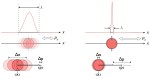
If you possessed a computer with enough power, you could conceivably simulate the entire Universe. From the inception of the Big Bang, you could compute the positions and momenta of every particle and every interaction over time, across all 13.8 billion years. If your simulation was good enough, you could even account for quantum processes and uncertainty, and you’d wind up with planets, life, and even human brains at the end. But if this were representative of our reality, would there be any way to tell? Maybe computational short-cuts would show up as some sort of fundamental blurriness at small enough scale. And what would that tell us about our quest to understand the fundamental constants, particles and interactions that define our Universe? Would it all be futile? Perhaps there would still be something important to learn about our existence by asking the right fundamental questions through experiments.

This was a hot topic earlier this year, and thanks to Rudy Kellner and Samir Kumar, it’s the subject of this week’s Ask Ethan!

Don’t ‘Build It Back’

stoweboyd:

The amazingly short-sighted ‘Build It Back’ program – New York City’s overly-ambitious rebuilding of Hurricane Sandy damaged homes – is going to overrun time and financial goals:

After Sandy, Overpromising and Underdelivering  

The program is $500 million over budget and on track to blow its end-of-2016 completion deadline. Under the program, begun by Mayor Michael Bloomberg, the city was to repair or rebuild homes or to reimburse homeowners for repairs they completed themselves.

Of the 5,565 single-family homes in the city-managed construction pipeline, only 44 percent have been completed so far, and Mayor Bill de Blasio says that figure will reach 75 percent by the end of the year. Build It Back was originally budgeted to use $1.7 billion in federal housing funds, but now the de Blasio administration says it needs an additional $500 million in city funds to finish the job.

But the existential question isn’t hand wringing about the additional $500 million, although that does sting. The real issue is that in a world with rising oceans and increasingly violent weather, the buildings shouldn’t have been rebuilt at all.

In a rapidly changing climate, their windblown condos and bungalows are in harm’s way, and what government really should be rebuilding is storm-absorbing wetlands and parks.

Everybody wants to live on the beach. But when the storms blow and the waters rise, overmatched bureaucrats and frustrated homeowners will end up caught in the undertow, for years to come. In this sense, the very words “Build It Back” miss the point — unless by “back” you mean back, way back, from the water’s edge.

As I wrote in ‘13:

Stowe Boyd, The Shoreline Should Be Treated As A Commons, Not Private Property

“It’s up to the homeowner, and the vast bulk of homeowners are deciding to stay right where they are and rebuild,” Gov. Andrew M. Cuomo said at a news conference in Albany.

Why is it up to the homeowner when it is the government spending billions of our money to stupidly rebuild private homes in neighborhoods that will undoubtedly be swept by hurricanes again in the near future? Will Cuomo say the same, then? Of course, he may be out of the Governor’s mansion then, and off doing other things.

We are in the postnormal, and this is the sort of result we can expect. We’re confronted with an existential threat – the increasing violence and frequency of ocean storms, rising sea levels – and we respond as if this is still 1950, or 1850. We are unwilling to adopt new responses to new problems, and the first barrier is our understanding: we don’t realize we aren’t in Kansas anymore, but on the other side of the rainbow.

Climate change is a synonym for human stupidity.

They now talk about speeches Hillary gave to “executives” and “bankers” at finance companies, and how terrible it was, and they have no idea what they are talking about. and that’s unfortunate and annoying.

My old company had often invited successful people like Ruth Bader Ginsburg, Craig Newmark (of Craigslist), Nicholas Kristof and Sheryl Wu Dunn to give talks.
The “executives” and “bankers” in the auditorium were mostly low-level and unimportant people like me – it would be anyone who signed up quickly enough and felt it was important to learn from them.
My old company clearly felt that it was important to keep their people aware of the world greater than themselves and how what they do every day affects it. They actively pushed their people to be civically engaged, run for office, participate in nonprofits, volunteer, and give back in any way they could – and simply being aware and inspired is the first stepping stone. The crappy mediocre company I worked for last certainly did not care for anything like it, and this one is too small to afford it – and that’s too bad.