
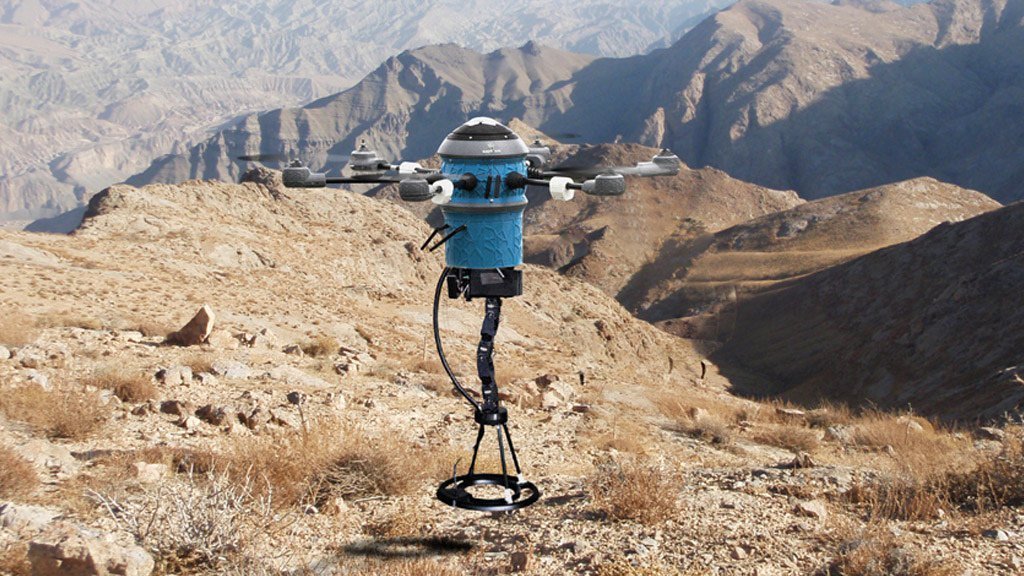
Drones Are Now Able To Detect And Detonate Land Miines
Can we just get the U.S., Russia, China and North Korea to stop making land mines and start making these instead?
This city feels so bloody glamorous – I’ve never felt this self conscious.
At least Eataly has free wine tasting so I had some for the long train ride home.
A guy at my office has been polling people on when was the last time they’ve been in a fistfight.
I couldn’t even recall. Have I actually managed living through my entire teenage and adult stages successfully avoiding one?
He said that this blissful peaceful existence ends when one becomes a parent, as brawls between parents to resolve their sproglings’* disputes are apparently common in this hyper competitive city. Something to look forward to!
(Last time I actually saw one was in Switzerland. the irony!)
*thank you, magical englishpeople for improving my vocabulary
A thoughtful post by someone I follow is making me once again ask myself why use this site and post minutia of my life on here, and how true and curated it all is.
I started writing things in this place to be some sort of outlet – both for my anxieties and fears, as I have no other good place to express them, and for recording the little things that I see that make me happy. A kind of recorded memory hoard that I could go back to in a few years when the world is more complicated but I am hopefully wiser, and remember the time when things were simpler yet, and I was less cynical.
The fact that only one person in my life knows about its existence (two, if counting a former classmate from a class where Tumblr was my case study), is what I thought would help me keep it honest.
also, I am not an artist, nor could I ever hope to be, so I shouldn’t really care about recognition, or really, what anyone would think.
However, the fact that it is open to the world, unlike a diary of simpler days, is what makes it different. She is right. Even here, it is hard, probably impossible, to refrain from curation and presenting an improved, but somewhat fake, version of oneself. Maybe it’s just what an average human is supposed to do. I still worry about being judged, even despite the level of anonymity this site affords (someone with skill and determination could figure out who am, but thankfully it would not matter to anyone but me). I still care about what others think, even, especially, because they are strangers. With a few exceptions (when they got picked up by popular tumblrs), my posts hardly get any notes, and the all-too-rare moments when I get to talk to someone on here, people completely different from me or anyone I know, are as precious as meeting a traveler from a thoroughly foreign place at a hostel, who you spend a whole night talking to, and who somehow magically understands everything about you. Then, you both get on your way, and nothing remains but memory and a sharpened sense of wonder. I will never know if I had a similar effect on others, but it is best I can hope for.
Just like the act of observing a subatomic particle forever fixes its state, the act of expressing thoughts in the open alters them, and, more importantly, it feeds back on myself and makes me different.
If that turns me into a little more like my curated version, even if it’s not entirely honest, maybe it’s worthwhile to keep posting on here, and maybe something good could come out of it.



How Science Can Learn More About ‘Proxima b’ And All Earth-Like Worlds
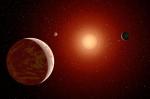
“This planet is almost definitely tidally locked to its star, meaning that the same hemisphere always faces the star and the opposite hemisphere always faces away, just like the Moon does to Earth. The star itself is active and flares frequently, meaning that catastrophic radiation impacts the Sun-facing side quite regularly, but never touches the dark side. And the “seasons” are determined by the ellipticity of its orbit, rather than its axial tilt. But there’s still so much left to learn, and we have a number of different technological avenues to explore – including potentially all of them – if we want to learn more about it.”
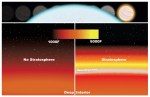
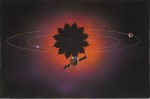
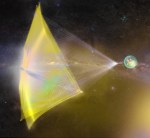
Now that we’ve learned the nearest star to our Sun, Proxima Centauri, has a rocky planet at the right distance for liquid water, it’s time to consider how we might learn the answers to our burning questions about it and all nearby Earth-like exoplanets. What’s the atmosphere like, and what does it consist of? What does the surface of the world look like, and what’s on it? And is there life, or intelligent life, present at all? There are three ways to conduct these searches, and they’re all complementary. We can use giant ground-based telescopes, including arrays of telescopes, for high-resolution spectroscopic images of these worlds. We can use space-based telescopes with coronagraphs or starshades to image these worlds directly over time. Or we could undertake a journey across space, and visit the system directly to obtain in situ measurements we could never get from afar.
Finding out how this planet is no longer a statistical probability but a real thing made my day yesterday.
Tove Jansson video round-up!
If you’re really in the mood to celebrate Tove Jansson’s 100th birthday, you might check out one or all of the many videos available online about Jansson’s life and work. Above, the entire BBC Documentary, Moominland Tales: The Life of Tove Jansson, which goes into great detail about Jansson’s childhood, her family, her life in Helsinki and rural Finland, her loves, the Moomins, and her novels (particularly The Summer Book, starting around the 51:00 mark).
Above, a lovely little film tour (no narration) around the tiny island of Klovharun, where Jansson and her partner Tuulikki Pietilä built a house (no electricity!) to live and work in during the summers.
The office favorite around here, however, has to be this short video of Jansson drawing a couple of Moomins without ever letting go of her cigarette. She was a pro.
Got clued in to the existence of this documentary by @peachslicesinsyrup and must find the time to see it.
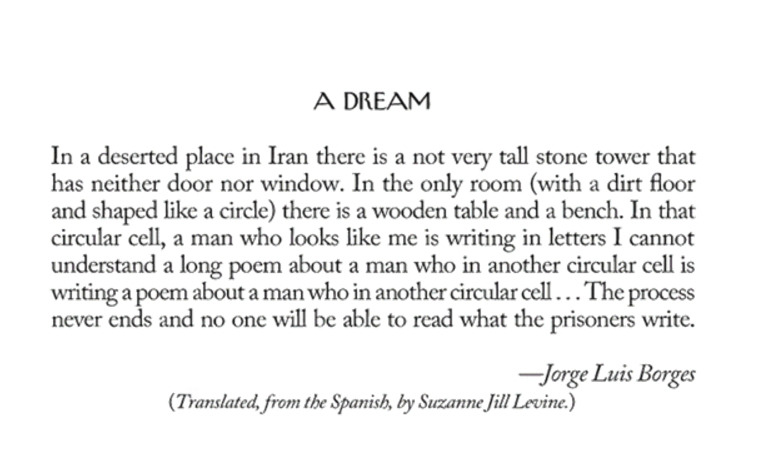
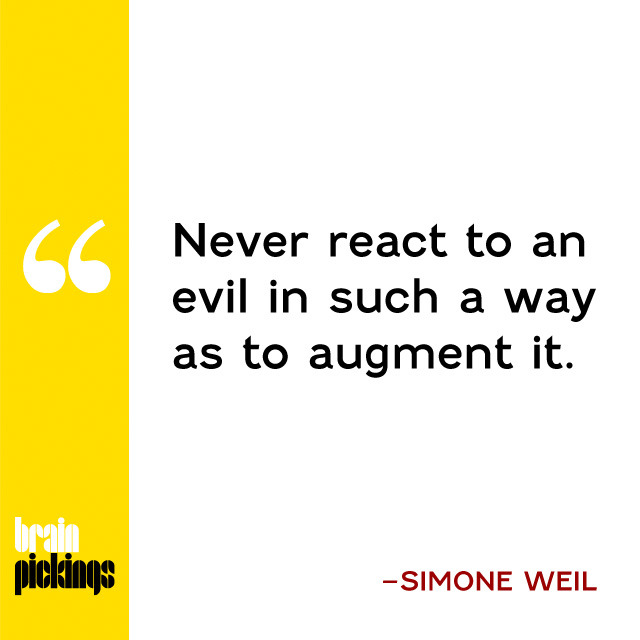
Simone Weil died, far too young, on this day in 1943. She remains perhaps the closest thing we have to a secular modern saint. Here is her timeless wisdom on how to be a complete human being.
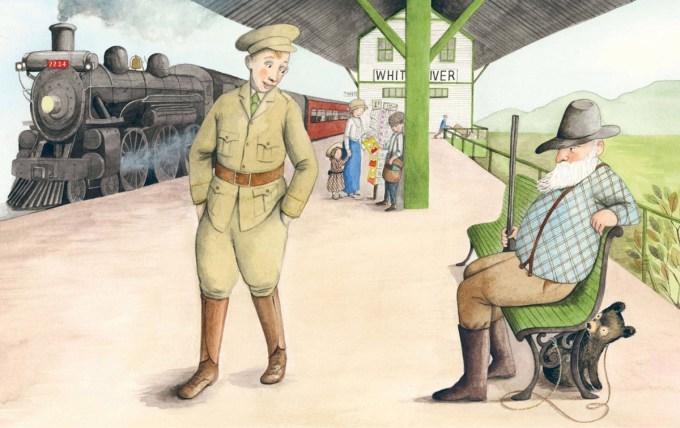
On this day in 1914, a kindly Canadian vet saved the real-life baby bear who would inspire A.A. Milne’s Winnie the Pooh. Here is her story, illustrated by the inimitable Sophie Blackall.
 tinfoilparachute