Strong Artificial Intelligence (AI) is a type of machine intelligence that is equivalent to human intelligence. Key characteristics of strong AI include the ability to reason, solve puzzles, make judgments, plan, learn, and communicate. It should also have consciousness, objective thoughts, self-awareness, sentience, and sapience.
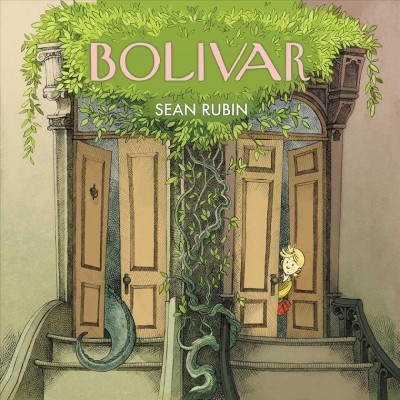
Friendship is one of the most important themes in children’s literature. From the Peter Rabbit books to Winnie-the-Pooh, many of our favorite works for younger readers have retained their meaningfulness precisely because they taught us about how empathize, communicate, and play in our earliest relationships. The books we selected for our Best Books for Kids of 2017 list include a story about a child’s love for an oak tree, the tale of a lost pet, and a book about growing up in 1960s Los Angeles.
At the cafe that mercifully opens early (bless the sleepless hearts of the people who work there), and even has a fireplace and a tent outside in the back with a pile of toys and books, for some reason, in Dutch, a pair of dudes with binoculars walked in.
When I grow up, I might become a birder after all.
On the radio, they talked a little about that latest big school shooting in KY. And then they said how it was actually 18th, or 19th – THIS YEAR. And then they read a little list, just very basic – when, where, how, how many kids died, how many were hurt. It took a long time!
We don’t really see it here in our bubble – none were in this big city or anywhere close – we have relatively sensible laws though with open borders, it could have been just luck. But why must our country be so insane that this can continue to happen and we can do absolutely nothing about it, outside our little immediate area?
Let’s say we had a way to distribute beacons around our solar system
(or beyond) that could survive for billions of years, recording what our
civilization has achieved. What should they be like?
It’s easy to come up with what I consider to be sophomoric answers.
But in reality I think this is a deep—and in some ways
unsolvable—philosophical problem, that’s connected to fundamental issues
about knowledge, communication and meaning.
Still, a friend of mine recently started a serious effort
to build little quartz disks, etc., and have them hitch rides on
spacecraft, to be deposited around the solar system. At first I argued
that it was all a bit futile, but eventually I agreed to be an advisor
to the project, and at least try to figure out what to do to the extent
we can.
But, OK, so what’s the problem? Basically it’s about communicating
meaning or knowledge outside of our current cultural and intellectual
context. We just have to think about archaeology
to know this is hard. What exactly was some arrangement of stones from a
few thousand years ago for? Sometimes we can pretty much tell, because
it’s close to something in our current culture. But a lot of the time
it’s really hard to tell.
OK, but what are the potential use cases for our beacons? One might
be to back up human knowledge so things could be restarted even if
something goes awfully wrong with our current terrestrial civilization.
And of course historically it was very fortunate that we had all those
texts from antiquity when things in Europe restarted during the
Renaissance. But part of what made this possible was that there had been
a continuous tradition of languages like Latin and Greek—not to mention
that it was humans that were both the creators and consumers of the
material.
But what if the consumers of the beacons we plan to spread around the
solar system are aliens, with no historical connection to us? Well,
then it’s a much harder problem.
I want to be able to afford to live somewhere where I could bike to work. MTA just keeps getting worse every week and I want to never deal with them and be late because of them again!
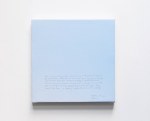
On January 7, 2001, the artist Byron Kim made a painting of a clear blue sky. The blue is, more precisely, a deep, powdery periwinkle—a twinge darker at the lower left corner of the composition than at the upper right. The not-quite-monochrome painting looks like pleasure: a day spent laid out on an off-season California beach, fingers nested behind your head, gazing upward. Below the blue, on a naked stripe of wood panel, are a few words written by Kim. “Clear, snow melting dripped into the painting,” he wrote. “Every Sunday?”
That question quickly became a practice. On just about every Sunday for the past seventeen years, Kim has made a painting of the sky, accompanied by a few lines of diaristic rumination. (He isn’t perfect—“Despite carrying a panel in the car all day yesterday, I forgot to do a Sunday Painting,” he wrote on May 7, 2012, a Monday.) Now a selection of more than a hundred of the paintings, arranged chronologically, can be viewed at James Cohan Gallery in Chelsea. Until the show’s closing, in early February, a fresh painting will appear every Sunday, giving the exhibition some of the inexhaustible iterability that characterizes Kim’s subtle, intelligent, and quite moving project.









 tinfoilparachute