US legislators proposed a $20-million experiment that could bring benefits to gig-economy workers

stoweboyd:

Senator Mark Warner and Rep Susan DelBene has introduced bills into Congress for an experiment in portable benefits for freelancers:

Making benefits portable means allowing workers to keep them as they move from job to job, or gig to gig. In the US, there’s one portable benefit that everyone gets: social security. Workers keep the same account—administered by the federal government—when they switch jobs, and multiple employers can contribute to that same account on behalf of the same worker simultaneously.

There are also a handful of portable-benefit programs for independent workers exist in the US. The Black Car Fund in New York, for instance, is a workers-compensation fund for drivers, paid for by a 2.5% surcharge on their customers’ fares. The Freelancers Union, a federation of independent workers, offered access to a group insurance plan for people without traditional employers, until the Affordable Care Act made the model illegal (now the organization offers individual plans). Unions for building trades and actors administer benefit funds that multiple employers can pay into on behalf of workers.

This is a kind of thing that would actually stand a chance of passing if democrats were given a chance to have any kind of relevance.
Even if this experiment ultimately fails, at least we would be learning…

US legislators proposed a $20-million experiment that could bring benefits to gig-economy workers

thenewenlightenmentage:

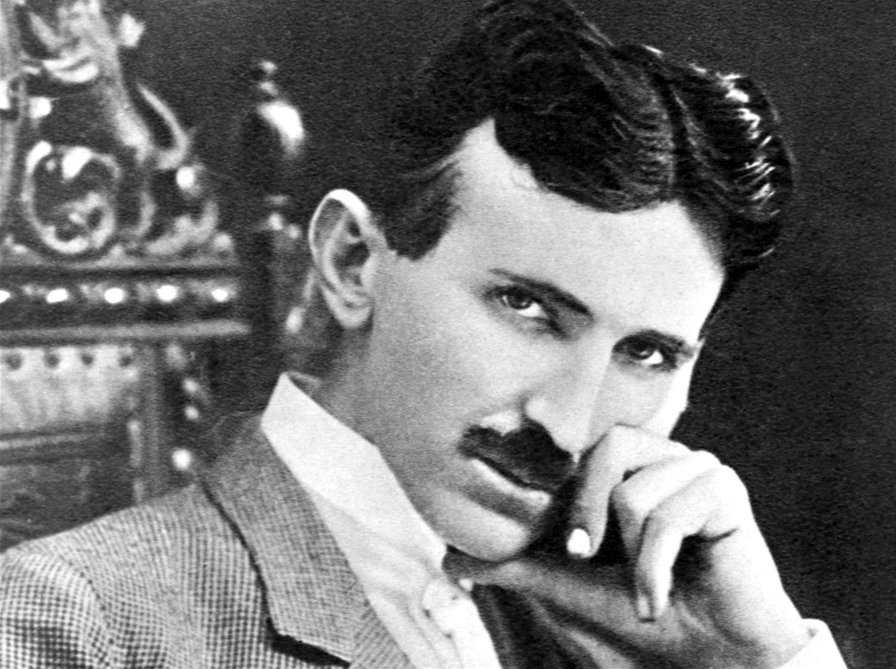
How to Diet and Exercise Like the Genius Inventor Nikola Tesla

By Paul Ratner

The inventor Nikola Tesla had one of the most creative and prolific brains humanity has ever produced. He kept working on ingenious projects well into the late years of his life, staying energetic and focused (albeit leading a somewhat ascetic, asexual and aloof life). How did Tesla keep sharp and achieve so much? In a 1933 interview, the 77 year-old Tesla spoke about what kept him going in life.  

He believed that it was important to get a good start in life, developing healthy personal habits even as young people –

Continue Reading

An independence-war-era cannon at a little park in the town. L saw it, climbed it and started to sing the “old Macdonald had a farm” song because the wheels looked exactly like those in the book.

How will I explain it later to him that the this thing was made with the only purpose to hurt and kill people who were also someone’s parents?

It’s beautiful here, and peaceful, and this airbnb’d house now smells of lilacs that we brought in, and L got to see some old machinery in the forest, and chickens, and goats, and rabbits, and being a city baby thought that birds were making a police siren sound.
I really want a place that we could make our own up here, always had, and this was the trip to see how realistic it could be. The long and torturous conversation yielded that we had a very different ideas for how and whether it could work, and that I must now abandon it.

What I learned is that I want a place to go to if or when the world falls apart – something to leave when I’m no longer here – but I now have to find some other way.

We are all in the depths of a cave, chained by our ignorance, by our prejudices, and our weak senses reveal to us only shadows. If we try to see further, we are confused; we are unaccustomed. But we try. This is science. Scientific thinking explores and redraws the world, gradually offering us better and better images of it, teaching us to think in ever more effective ways. Science is a continual exploration of ways of thinking. Its strength is its visionary capacity to demolish preconceived ideas, to reveal new regions of reality, and to construct new and more effective images of the world. This adventure rests upon the entirety of past knowledge, but at its heart is change. The world is boundless and iridescent; we want to go and see it. We are immersed in its mystery and in its beauty, and over the horizon there is unexplored territory. The incompleteness and the uncertainty of our knowledge, our precariousness, suspended over the abyss of the immensity of what we don’t know, does not render life manginess: it makes it interesting and precious.

Rovelli, Carlo. Reality is Not What it Seems: The Journey to Quantum Gravity. NY, NY: Riverhead , an imprint of Penguin Random House LLC, 2017. 8. Print. (via thenewenlightenmentage)

minus229k1:

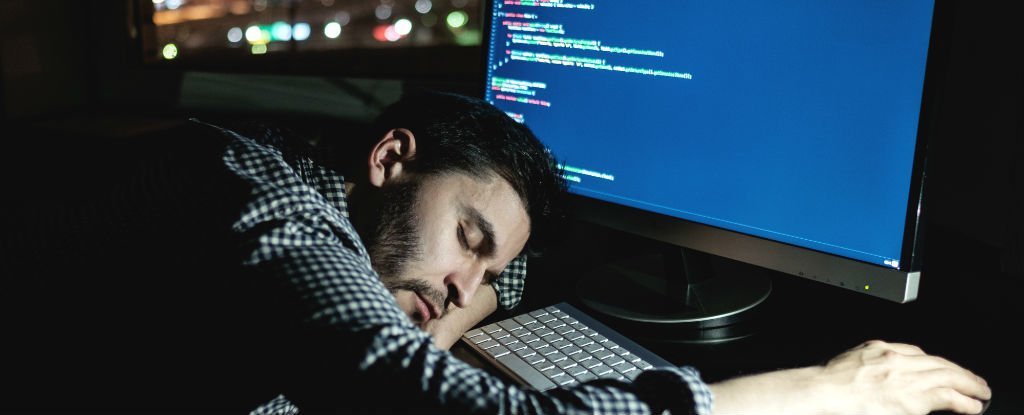
Sleep deprivation is a kind of torture – whether you suffer from insomnia, have just no time, or are improsioned (yes, they really use it as a kind of torture). The human body should re-fuel every 12 hours, among the reasons is that our brain clears toxic byproducts of neural activity while we sleep. But this process also takes place when we are deprived of sleep  but in the not so good way thus cleaning away valid and important neuronal connections, which will lead eventually to brain-damage.

Michele Bellesi and his team from the Marche Polytechnic University of Italy examined brains of mammals when they were put under pressure of poor sleeping quality.
The neurons in the brain are refreshed by two different types of glial cells, the microglial, which is responsible for a process called  phagotosis, cleaning out and devouring old and worn out cells and the astrocytes, which cuts unnecessary synapses. 

With sleep deprivation, the brain starts to literally eat itself; this was found out in an experiment where the researchers imaged the brains of four group of mice. One group slept six to eight hours, thus was well-rested; a second was periodically woken up; the third was kept awake for eight extra hours, and the final one was kept awake straight for five days.
The outcome showed that the astrocytes “ate” 5,7 percent of the synapses in the first group, but up to 7,3 percent in the second one; in group three this raised to 8,4 and it the fourth group to 13,5.
The microglial cells showed similar statements.
This outcome suggests a connection between lack of sleep and neurodegenerative diseases.